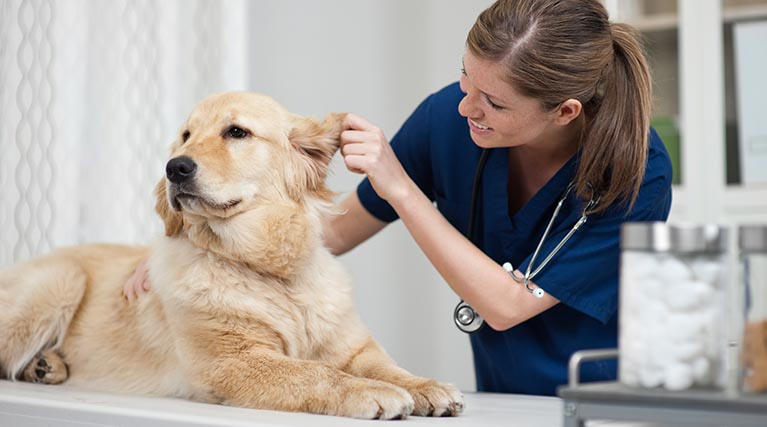
Veterinary schools in Georgia offer students an opportunity to learn about the medical profession. You can also get involved in different vet hospitals. These schools prepare graduates for careers as vet techs and veterinarians.
Veterinary technician programs in Georgia are accredited by the American Veterinary Medical Association. They help veterinarians provide quality care for their animals. They are responsible for performing examinations on both pets and livestock. They evaluate the safety and health of animals and provide advice on food and water safety. Vet techs might also be called veterinary technicians. They may also be able to assist veterinarians in performing surgical procedures or euthanasia. They might also monitor animals that are being raised for contagious illnesses. Vet techs are usually supervised by veterinarians.

A two- or three year program must be completed by students who want to become a veterinarian tech. The curriculum includes science-based education such as anatomy, radiology and animal anatomy. Some veterinary schools also offer coursework on pharmacology for veterinarian technicians. A student may need to take a background check, drug test, and physical exam. Some schools also require the rabies vaccine. Student may also need to intern at a veterinarian clinic.
Georgia's vet tech students may qualify for financial aid. Financial aid may include scholarships, loans, grants and loans. Some schools may not be eligible for these types of programs. To apply for financial aid, a student should fill out the Free Application for Federal Student Aid. This application lists all scholarships available. Georgia Student Finance Commission may also provide financial assistance. Georgia veterinary technician students may also be eligible to the HOPE program. Georgia's excellent HOPE program is highly recommended.
The Georgia State Board of Veterinary Medicine also approves Georgia's veterinary school programs. Students must complete a program to become licensed veterinary technicians in Georgia and pass the Veterinary Technician National Examination. All applicants must provide proof that they have completed 40 hours of volunteer work at a veterinary hospital. American Association of Veterinary State Boards administers the VTNE exam. The VTNE examination is a comprehensive exam that takes about three hours.
Georgia's vet tech schools require that students complete a minimum of two years of studies. A clinical internship must be completed by students in Georgia. Students learn how to perform veterinary procedures, anesthesiology and other procedures. In addition, students learn the day-to-day functions of a veterinary clinic. Students might also be taught about animal handling, records keeping, and management.

Students in the Veterinary Technology program are assigned an advisor who will provide them with guidance throughout their studies. The minimum requirements for the program are that applicants have completed high school and been vaccinated against Rabies. This vaccination can either be obtained from a primary or travel clinic. A student must have the vaccination by the time they start Veterinary Clinical Procedures I.
FAQ
How often do I need to groom my dog every day?
Grooming your dog will make him happy. Grooming your pet helps keep it clean and maintains his coat.
Your dog needs to be brushed at least twice a week. You should brush him after each meal.
Brushing your dog's fur will remove loose hair and dirt. Brushing your dog's teeth will make him look more healthy.
Brushing his ears regularly will prevent ear infections.
Which is the best pet you have?
The best pet is the one you love. There is no correct answer. Every individual has his/her own opinion on the best pet.
Some believe cats are more intelligent than dogs. Others feel that dogs can be more loyal and loving than cats. Others argue that birds make the best pets.
No matter which type of pet you decide on, you have to choose what type of personality you want.
If you are outgoing and friendly, a dog may be right for you. Cats are best suited for shy people who are reserved.
Also, take into account the size your house or apartment. A smaller apartment will mean that your pet will require a smaller size. You'll need more space if you have a larger home.
Remember that pets need lots of attention. Pets need to be fed frequently. They must be taken on daily walks. They must be brushed regularly.
You'll be able pick the best pet for you if you have all of these knowledge.
How to train your pet
It is important to be consistent when training your dog or cat. You need to be consistent in how you treat them. They will distrust you if they perceive you as being mean. They may also begin to believe that all people are like them.
If you don't treat them with respect, they will not know what else to expect. This could make them anxious about other people.
Positive reinforcement is the best way to teach your cat or dog. They will be motivated to perform the same behavior if you reward them.
Punishing them when they do something wrong will associate bad behaviors with punishment rather than rewards.
Good behavior should be reinforced with treats, such as food and toys. Give praise wherever possible.
Clickers can help you train your pet. Clicking is a technique where you tap on a button to tell your pet that he did well.
This works because animals can understand that clicking "good job" means "good luck".
First, show your pet the trick. Then, you should ask him to perform the trick while rewarding him.
Give him praise when he does it right. Be careful not to overdo it. Be sure to praise him only once.
It is also important to establish limits. Don't let your pet jump up on other people. Or don't allow him to bite strangers.
Always supervise your pet to make sure he doesn’t hurt himself.
Which amount cats or dogs are easier to train?
Both. It depends on how they are trained.
If you give them treats for doing what they're supposed to do, they'll learn faster. They'll learn to ignore you if they don't listen.
There is no right or wrong way to teach your cat or dog. You must find the best way to teach your cat or dog.
Statistics
- Monthly costs are for a one-year-old female mixed-breed dog and an under one-year-old male domestic shorthair cat, respectively, in excellent health residing in Texas, with a $500 annual deductible, $5,000 annual benefit limit, and 90% reimbursement rate. (usnews.com)
- In fact, according to ASPCA, first-year expenses can sum up to nearly $2,000. (petplay.com)
- Reimbursement rates vary by insurer, but common rates range from 60% to 100% of your veterinary bill. (usnews.com)
- Here's a sobering reality: when you add up vaccinations, health exams, heartworm medications, litter, collars and leashes, food, and grooming, you can expect a bill of at least $1,000 a year, according to SSPCA. (bustle.com)
- It's among a relatively few companies that provide policies with a full (100%) coverage option, meaning you are not responsible for any co-payment of bills. (money.com)
External Links
How To
How to teach a cat how to use the litterbox
Although litter boxes can be great for reducing pet waste, they are not always a good choice for cats. They can be too small for cats, or simply wrong for them. This could lead to them smearing litter on the floor and leaving it there.
These tips will help you make the most of teaching your cat to use a litter box.
-
Your cat should be able to stand straight in the box, without having to lean down.
-
Try to place it where your cat likes to go outside - if that doesn't happen naturally, try putting it near another room with a door leading outside.
-
You can give your cat water when he needs it. He will be less stressed about using the litter box if he is well hydrated.
-
Avoid making loud or sudden movements when you first introduce the cat to the box, especially if your cat has been outside for a while.
-
Once he is comfortable with the idea, you can reward him with praise for using the box correctly. You might even want to include treats in his rewards, though these should only be given after he's done his business.
-
Your cat shouldn't be forced to use the box.
-
Be patient! It might take several weeks before your cat uses the box every day. Be patient.
-
You should contact your veterinarian immediately if you observe any changes in your cat’s behavior such as aggression towards other people or animals. This could be a sign that your cat has a serious problem such as a kidney infection or a urinary tract condition.
-
Last but not least, make sure you clean up after your cat each day.