Pet owners should consider Connecticut pet insurance. This will not only ensure that your pet is receiving the best medical treatment, but it can also provide financial assistance. Although a veterinary emergency may leave you with a big bill, insurance can help to cover the cost.
You should ensure that your policy covers a wide variety of conditions. Insurance should cover routine care as well as emergency care, dental procedures and behavioral modifications. You can avoid huge vet bills by choosing a pet insurance policy that helps you lower your deductible.
Many insurance companies offer a range of coverage options. The most commonly offered coverage is an Accident & Illness plan. This type of insurance covers your pet for any kind of treatment, from vaccinations to surgery. This type of plan often comes with a deductible, which you will need to pay before the insurer begins to reimburse you. Higher deductibles will lower your monthly premiums but mean that you'll be responsible for more expenses in the event you are injured.
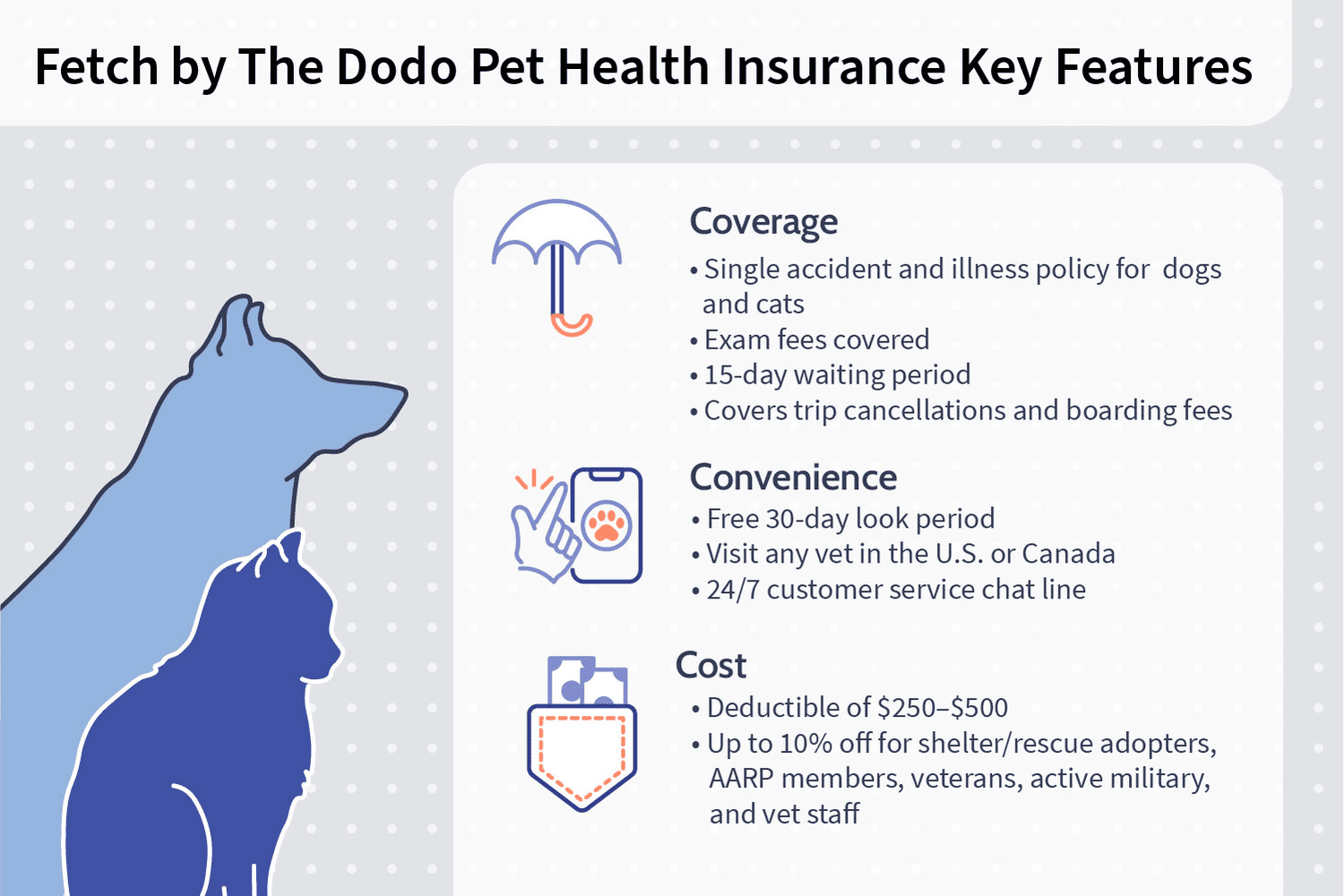
While most pet insurance plans in Connecticut have an annual deductible, you may want to consider getting a deductible for each specific incident. This could be a good choice if you are planning an important event, such as a marriage or birth, or if your premium is high. Three different plans for accident-illness insurance are available through the Figo Cloud App.
An intelligent pet insurance policy in Connecticut could save you thousands of dollars over the long-term. A reliable company will offer high reimbursement rates, deductibles that are low, and unlimited coverage each year.
You can get reimbursed by any Connecticut vet. Another advantage to choosing Connecticut pet insurance policies is the ability to be reimbursed. You can either visit your local vet or go to any American veterinarian depending on the plan. You can also benefit from a Veterinary Discount Plan.
A questionnaire is the most popular way to request a quote. Once you have completed the questionnaire, you will receive a quote based upon your pet's breed, age, as well as other factors. You can also contact an insurance agent to help you get started. They can guide you through the entire process.
It is easy to choose the right pet insurance policy for your Connecticut home. The key is to learn the differences among the different insurance options and then find the best plan for your budget and needs.
There are two types of plans available: the Accident and Invalidity and the Wellness. While both will cover routine medical treatment for your pet, the Accident and Illness plan provides better coverage. For example, if your dog develops a broken leg, the Accident and Illness plan will pay for the hospitalization costs, while the Wellness plan will pay for the actual repair.
FAQ
What are your responsibilities as a pet owner?
An owner of a pet must love their pet unconditionally. They should provide for their basic necessities such as shelter, water, food, and clothing.
They should also teach them how to behave properly. It is important to take care of your pet and not neglect it.
He should also be responsible enough and able to take care of it.
What should I do?
This question really depends on your personality. Some people love kittens, while others prefer puppies.
But, in general, puppies tend to be more active and playful. Kittens are gentle and tend to sleep a lot.
Both types of animals require lots of attention from their owners. They will quickly grow up and will require lots of care.
You will need to take them to the vet for regular checkups. This means that you will have to spend some time with them at the vet.
How do you train your pet?
Consistency is the most important aspect of training a cat or dog. Consistency is key when training a dog or cat. They will distrust you if they perceive you as being mean. They might believe all people are evil.
They will not know what to expect if you're inconsistent with your treatment. They could become anxious around other people if this happens.
Positive reinforcement is the best way to teach your cat or dog. Positive reinforcement will make your pet want to continue doing the same thing.
When they do something wrong, it is easier to punish them than reward them.
You should use treats such as food or toys to reinforce good behavior. Give praise wherever possible.
Clickers can be used to train your pet. Clicking can be described as a technique that allows you to click on a button to inform your pet that he did a good job.
This is because clicking indicates "good job" to animals.
When teaching your pet tricks, you should first show him the trick. You should then ask your pet to perform the trick and reward him.
He should be praised when he does it correctly. But don't overdo it. Do not praise him more than one time.
You should also set limits. It's important to set limits. Or don't allow him to bite strangers.
Make sure your pet is well-supervised so that he doesn’t harm himself.
What kind of food should my dog eat?
Your dog should be fed a balanced diet.
Chicken, beef, eggs and dairy are some of the protein-rich foods.
Other foods high in carbohydrates include vegetables, fruits, breads, cereals pasta, rice, potatoes and beans.
A variety of foods that are low-fat include lean meats (poultry, fish), nuts, seeds, legumes, and whole grain.
Always consult your veterinarian before feeding your dog different types of foods.
What are your considerations when choosing a pet to own?
First, think about what type of lifestyle you desire for yourself and your family. Do you have kids? If so, how many? How old are they now Are there any special dietary preferences?
Do you have allergies? Is there anything you need to know more about your pet
Now, you can think about whether you are looking to find an active companion, quiet lap dog or house-trained cat. Or perhaps a fish tank filled with tropical fish.
Adopting a puppy is a great idea. Make sure to visit a rescue or shelter group so you can get to know the animals and feel at ease with them.
It is also important to check if the animal was vaccinated against other diseases and rabies.
The owner should also be asked if the animal will be taken care of while you're away. This way, you won't have to worry about leaving your pet at home alone.
You should remember that pets are a part of your family and that you should not adopt them unless you truly love them!
What amount should I spend on my pet?
The best rule of thumb is to budget $200-$300 each month.
This can vary depending on where one lives. You would spend $350 per Month in New York City.
In rural areas, however you may only need $100 per calendar month.
It's important to remember that you should buy quality items such as a collar, leash, toys, etc.
Consider purchasing a crate for your pet. This will ensure your pet is safe while being transported.
Which breed is easier to train, cats or dogs?
Both. It depends on how they are trained.
Giving them rewards for doing what you want will help them learn more quickly. But if you ignore them when they don't listen, they'll start ignoring you too.
There is no right answer. You have to decide what the best way is to teach your cat/dog.
Statistics
- For example, if your policy has a 90% reimbursement rate and you've already met your deductible, your insurer would pay you 90% of the amount you paid the vet, as long as you're still below the coverage limits of your policy. (usnews.com)
- A 5% affiliation discount may apply to individuals who belong to select military, law enforcement, and service animal training organizations that have a relationship with Nationwide. (usnews.com)
- * Monthly costs are for a 1-year-old female mixed-breed dog and a male domestic shorthair cat less than a year old, respectively, in excellent health residing in Texas, with a $500 annual deductible, $5,000 annual benefit limit, and 90% reimbursement rate. (usnews.com)
- It's among a relatively few companies that provide policies with a full (100%) coverage option, meaning you are not responsible for any co-payment of bills. (money.com)
- Pet insurance helps pay for your pet's medical care, with many policies covering up to 90 percent of your vet bills. (money.com)
External Links
How To
How to train your pet cat
You need to first learn about the type of cat you want to train. Cats have complex brains. Cats are intelligent, emotional creatures. You must consider your cat's personality if you want them to behave well. It is important to know how to properly handle your cat.
It is important for cats to be independent. They do not like being told "no". It can also mean that they don't like being told "no" and may get upset at you. When your cat does something wrong, you shouldn't hit him/her. Your cat needs love and affection, but it does not mean you can treat him/her like a human being.
If your cat is having trouble, you can try to help them. Talk to your cat calmly. Don't yell at him/her. It can make your cat feel awful if you yell at her/him. Your cat cannot be forced to eat. Sometimes your cat may refuse to eat. When this happens, you should give him/her some treats. However, don't over-indulge as this could lead you to overeating.
Your cat should be kept clean at all times. Every day, wash your cat thoroughly. Use a wet towel to clean off dust and dirt. Check to make sure your cat is free of fleas. Flea bites can cause irritation to the skin and allergies. Flea bites can lead to skin irritation and allergic reactions. You should treat them with a special shampoo.
Cats love to be social. Cats love to spend time with their owners. That is why you should spend quality time with your cat. Play with your cat, play with him/her and give him/her a bath. These activities will make you cat happy.
If you want to train your cat, then you should start early. When your kitten is just two weeks old, you should begin training him/her. Your kitten should be around three months old to start training him/her. Your cat will be fully grown by this time and ready to learn new things.
You should explain everything step by step when you teach your cat tricks. When teaching your cat how to sit, for example, show it the chair first. You should then say "sit" to your cat and reward it/her with a treat. These steps should be repeated until your cat understands.
Keep in mind that cats are intelligent animals. Cats are smart and can figure out how to do tasks. They do require patience and perseverance. Don't expect your cat to instantly master a task. Allow your cat to practice for a while before you give up.
Keep in mind that cats are wild animals. Cats are curious and playful by nature. If your cat is free to roam, he/she could accidentally knock over things. Your cat should be kept in a safe space where he/she will not hurt himself/herself.